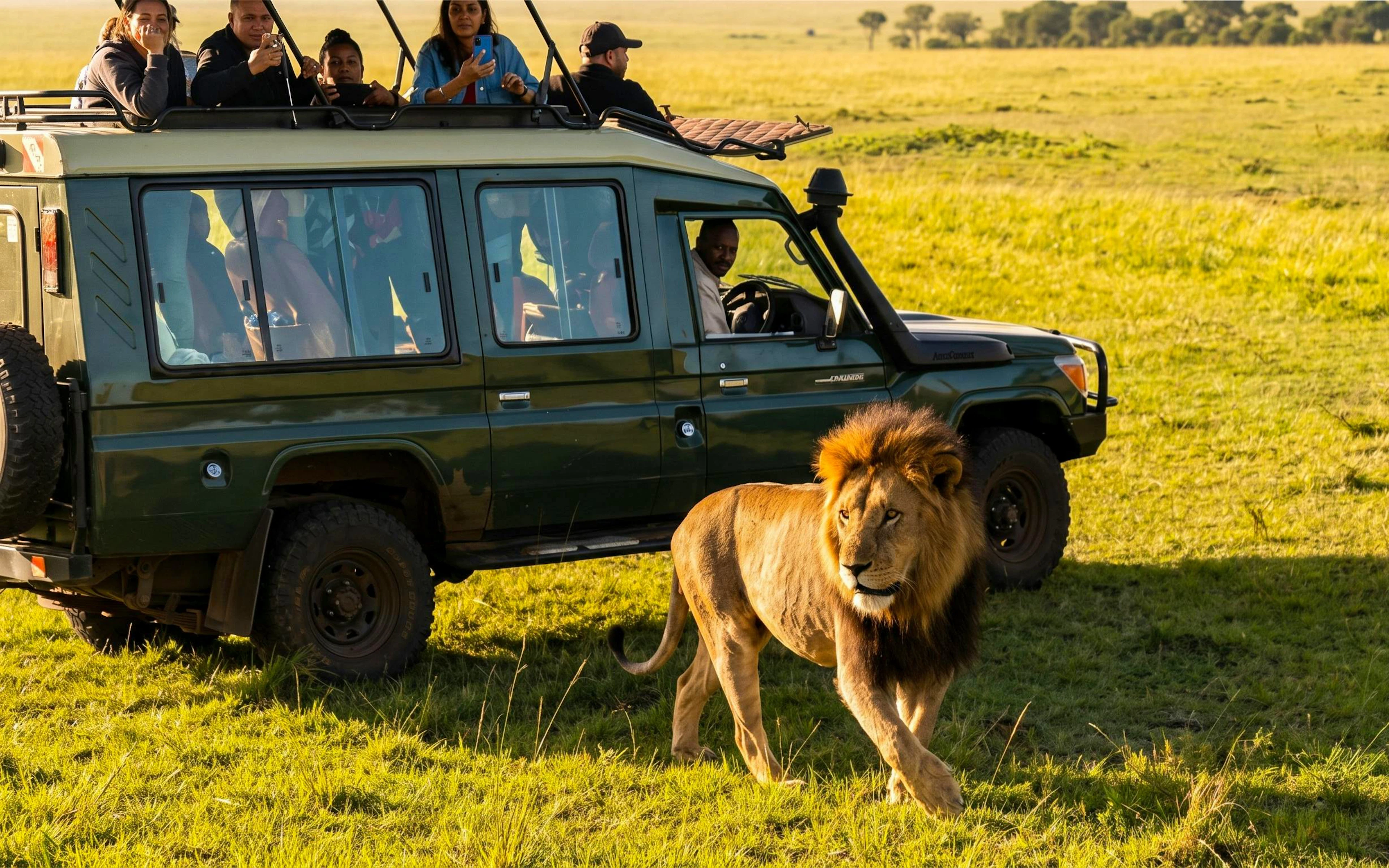
‌‌‌‌
‌

From quick day trips to week-long adventures, Masai Mara safaris from Nairobi suit different budgets and travel styles. Road safaris are more budget-friendly but take around 5–6 hours each way, while fly-in safaris get you there in about 45–60 minutes, plus a transfer to your camp. Choose 2–4 days to focus on the Mara or 5–7 days to add Lake Nakuru, Lake Naivasha or Amboseli. Options range from budget camps to luxury stays, with private and group tours available.

Quick facts

  • Travel time: Road trips take around 5–6 hours each way; flights take 45–60 minutes, plus transfers.
  • Time on the ground: Choose 2 days for a quick trip or 3–4 days for more game drives and a relaxed pace.
  • What fits in this trip: Game drives and camp stays, with optional Maasai village visits, balloon safaris, or bush breakfasts.
  • What’s included and what’s not: Check whether park fees, meals, accommodation, transfers, and activities are included.
  • Best way to do it: Choose a shared road safari for value, a private safari for flexibility, or a fly-in safari to save travel time.
  • Should you stay overnight? Yes. Overnight stays allow more game drives without a same-day return to Nairobi.
  • Price range: Shared road safaris are usually cheapest, private road trips cost more, and fly-in safaris are generally premium-priced.

Masai Mara day trip options

Visit typeIs it worth it?What the trip feels likeBest alternative

Private day trip from Nairobi

Yes, if you’re short on time

A long road journey with limited time for game drives before returning to Nairobi.

Choose a 2-day or 3-day safari for more time in the reserve.

Fly-in safari (3D/2N)

Yes, for a shorter, more comfortable journey

A quick flight to the Mara, followed by transfers and game drives, leaves more time for wildlife viewing.

Choose a 4-day fly-in safari for a more relaxed pace.

Shared road safari (2D/1N or 3D/2N)

Yes, for budget-conscious travellers

Shared transport and long road journeys make this a practical way to experience the Mara on a budget.

Choose a 3-day or 4-day safari for more game drives.

Private road safari (3D/2N or longer)

Yes, if you want flexibility

Private transport gives you more control over the journey, though road transfers still take time.

Choose a 4-day safari to allow more time for game drives.

Multi-park safari (5–7 days)

Best for a longer holiday with more wildlife sightings beyond the Big Five

Combine Masai Mara with Lake Nakuru, Lake Naivasha or Amboseli for a varied Kenya safari.

Choose an itinerary based on the parks you want to visit and the time available.

How to get to Masai Mara from Nairobi

By road from Nairobi to Masai Mara

How it works: Travel from Nairobi to the Masai Mara National Reserve by road, usually via Narok, with entry through a reserve gate based on your itinerary.

Travel time: Around 5–6 hours each way, depending on traffic, road conditions and your camp’s location.

Cost: Varies by group size, transport type, accommodation, and package inclusions, such as park fees and meals.

Best for: Travellers looking for a more budget-friendly safari with the flexibility to choose shared or private road trips.

Trade-off: The long drive can limit game-viewing time on shorter safaris, so consider staying for 3–4 days to enjoy more game drives.

Fly-in to Masai Mara

How it works: Fly from Wilson Airport in Nairobi to a Mara airstrip, then transfer to your camp or lodge before your game drives.

Travel time: Around 45–60 minutes in the air, plus a transfer to your accommodation.

Cost: Generally higher than road safaris, depending on the camp, accommodation and package inclusions.

Best for: Travellers who want to spend less time travelling and more time on game drives.

Trade-off: Higher prices, luggage restrictions and possible schedule changes due to weather.

Private road safari

How it works: Travel from Nairobi in a private safari vehicle reserved for your group, with a dedicated driver-guide and flexibility over stops along the way.

Travel time: Around 5–6 hours each way, depending on traffic, road conditions and your camp’s location.

What private transport includes: A vehicle for your group, a driver-guide and transfers between Nairobi and the Mara. Game drives are included if specified in your package.

Cost: Usually higher than shared road safaris because the vehicle and guide are dedicated to your group.

Best for: Families, couples and photographers who want more privacy and flexibility.

Trade-off: You still have a long road journey, even with private transport. Check whether park fees, meals, accommodation and game drives are included in your ticket.

Get all the details you need to reach Masai Mara here.

National reserve vs. Conservancies

National reserves

​ Direct access to major migration river crossings

​ Highest wildlife and predator density

​ Lowest cost & included park fees

​ Large guide network to spot animals faster

​ Higher vehicle numbers around key predator sightings

Conservancies

​ Strictly capped vehicle numbers at sightings

​ Night drives and guided bush walks available

​ No direct access to main river crossing zones (requires extra driving into the Reserve)

​ Significantly higher mandatory accommodation & conservancy fees

​ Not included in standard 3 to 7-day safari packages

What your Mara day might feel like from Nairobi

Early morning game drive in Masai Mara
1/5

🍃 Early morning drive

The plains glow with dawn light, with red-dirt air, distant zebras, and the first low sounds of the bush waking up. This is the moment when the landscape feels widest and the day still has room to unfold.

Time needed: 60–90 mins

Local tip: Sit on the left side for broad savannah views.

🦁 Morning game drive

Wildlife viewing often sharpens as the morning builds, from predator silhouettes to elephant movement near water. The pace feels alert and scanning-heavy, with everyone watching the horizon and tree lines.

Time needed: 60–90 mins

Local tip: Watch water sources and open mounds for predator movement.

🐾 Midday break at camp

Return to camp for lunch and a break from the game drives. Rest during the hottest part of the day before heading out for an afternoon drive, when wildlife may become more active.

Time needed: Around 60 minutes, depending on your itinerary.

Local tip: Carry a light scarf to protect yourself from dust during game drives.

🦓 Afternoon drive

The afternoon often brings wider sweeps across the plains, with gazelles, buffalo, and changing light across open grassland. It feels less like a checklist and more like settling into the landscape.

Time needed: 2–3 hours

Local tip: Water edges often give you the most dramatic late light.

🛌 Camp or lodge

Return to camp for dinner, rest and a chance to look back on the day’s wildlife sightings. Evenings give you time to relax between game drives and enjoy staying in the Mara.

Time needed: Varies by camp and itinerary.

Local tip: Review your photos after dinner to remember the wildlife you spotted along the way.

Want to plan the perfect Masai Mara safari? Start here.

Should you do a multi-day tour?

Yes, if you want more time for wildlife viewing without rushing the journey. A multi-day Masai Mara safari lets you spread out road transfers, enjoy morning and afternoon game drives, and stay close to the reserve between outings. You can choose a 2-day trip for a quick visit, spend 3–4 days exploring the Mara, or opt for a 5–7-day itinerary that combines it with Lake Nakuru, Lake Naivasha or Amboseli.

Multi-day tours cost more than a day trip because they include additional accommodation, meals, and time in the reserve. However, they offer a more relaxed pace and more opportunities to spot wildlife. Choose a road safari for a budget-friendly option or a fly-in tour to spend less time travelling from Nairobi.

Best time for a Masai Mara safari

SeasonMonthsWhat it's likeCrowdsBook ahead

Peak

July–October

High wildlife density during migration, with dramatic viewing potential and heavier vehicle presence around popular sightings.

High

2–3 weeks minimum; popular lodges fill quickly

Shoulder

January–March, June

A balanced window for weather, wildlife, and lighter pressure than migration months, with strong all-round safari conditions.

Moderate

4–7 days usually sufficient; popular camps can fill earlier in June

Off-peak

April–May, November–December

Quieter and often better value, but wetter or more variable conditions can affect road quality, camp operations, and viewing rhythms.

Low

Same-week booking is often possible, subject to camp and road conditions

Want to know when to plan your safari? Find the best time to visit Masai Mara here.

How to prepare & make the most of your Mara trip

  • Closed-toe shoes: For dusty roads and uneven camp grounds.
  • Light layers: Mornings and evenings can be cool, while afternoons are warmer.
  • Sun protection: Pack sunglasses, a hat, and sunscreen for long game drives.
  • Binoculars or a zoom lens: Help you spot wildlife at a distance.
  • Refillable water bottle: Stay hydrated during drives and transfers.
  • Small daypack: Keep your essentials handy between the vehicle and camp.
  • Cash: Useful for tips and small purchases where cards may not be accepted.
  • Chargers and spare batteries: Keep your phone and camera ready for sightings.
  • Insect repellent and a light scarf: Help with insects, dust, and cooler evenings.

What not to bring

  • Large, heavy bags: Storage space in safari vehicles may be limited, especially on shared trips and fly-in safaris.
  • Drones: Their use is restricted in many protected areas and requires the relevant permissions.
  • Pre-book park entry and any add-ons such as balloon rides or Masai Village visits; these are usually arranged before departure.
  • Gate entry timelines can shift with traffic, weather, and processing flow, so build flexibility into expectations.
  • Migration-season departures and premium camps often need 2–3 weeks of lead time, while shoulder periods can be more flexible.
  • Check exactly what your package includes, especially park fees, meals, internal transfers, and optional activities.
  • Eat: Expect hearty lodge or camp meals, with some itineraries offering bush breakfasts or sundowners.
  • Shop: Maasai beadwork, handicrafts, and camp-based souvenirs are common; leave luggage room if you plan to buy.
  • Stay: Conservancy camps offer quieter viewing, while main reserve stays may place you closer to high-demand wildlife circuits in peak periods.
  • Local note: Camp position matters more than star rating if you want easier access to productive drive zones.
  • Start early: Morning drives offer cooler temperatures and opportunities to spot active wildlife.
  • Make the most of golden hour: Late-afternoon drives offer softer light for photography.
  • Dress in layers: Carry a light jacket for cool mornings and evenings.
  • Pack camera essentials: A zoom lens and spare batteries are more useful than extra general gear.
  • Watch animal behavior: Your guide can help you read the signs of nearby wildlife rather than chase reported sightings.
  • Allow time at reserve gates: Entry procedures and transfers can affect your game-drive schedule.
  • Stay flexible: Weather and wildlife movements can change your route and sightings throughout the day.
  • Keep quiet during sightings: This helps you observe animal behavior without disturbing wildlife or other guests.
  • Enjoy different times of day: The same landscape can feel completely different at dawn, midday and dusk, making repeat drives worthwhile.

Getting around once you arrive

Most movement inside a Mara itinerary is handled by safari vehicles, camp transfers, and guide-led game drives rather than independent local transport. Distances are large, road conditions can vary, and camp access depends on gate choice and operator logistics. In practice, once you arrive, guided transport does most of the work.

What guided formats handle automatically: camp-to-drive timing, gate sequencing, wildlife-route decisions, and return planning. The trade-off is reduced spontaneity, but DIY options inside the reserve are limited compared with city-based travel patterns.

Frequently asked questions about planning a Masai Mara safari

Yes, a 3D/2N or 4D/3N itinerary is feasible, but road transfers can take a substantial share of days 1 and 3. That is why pacing matters so much here. If you want to protect wildlife time, fly-in or private road formats usually work better than the most compressed shared road options.